
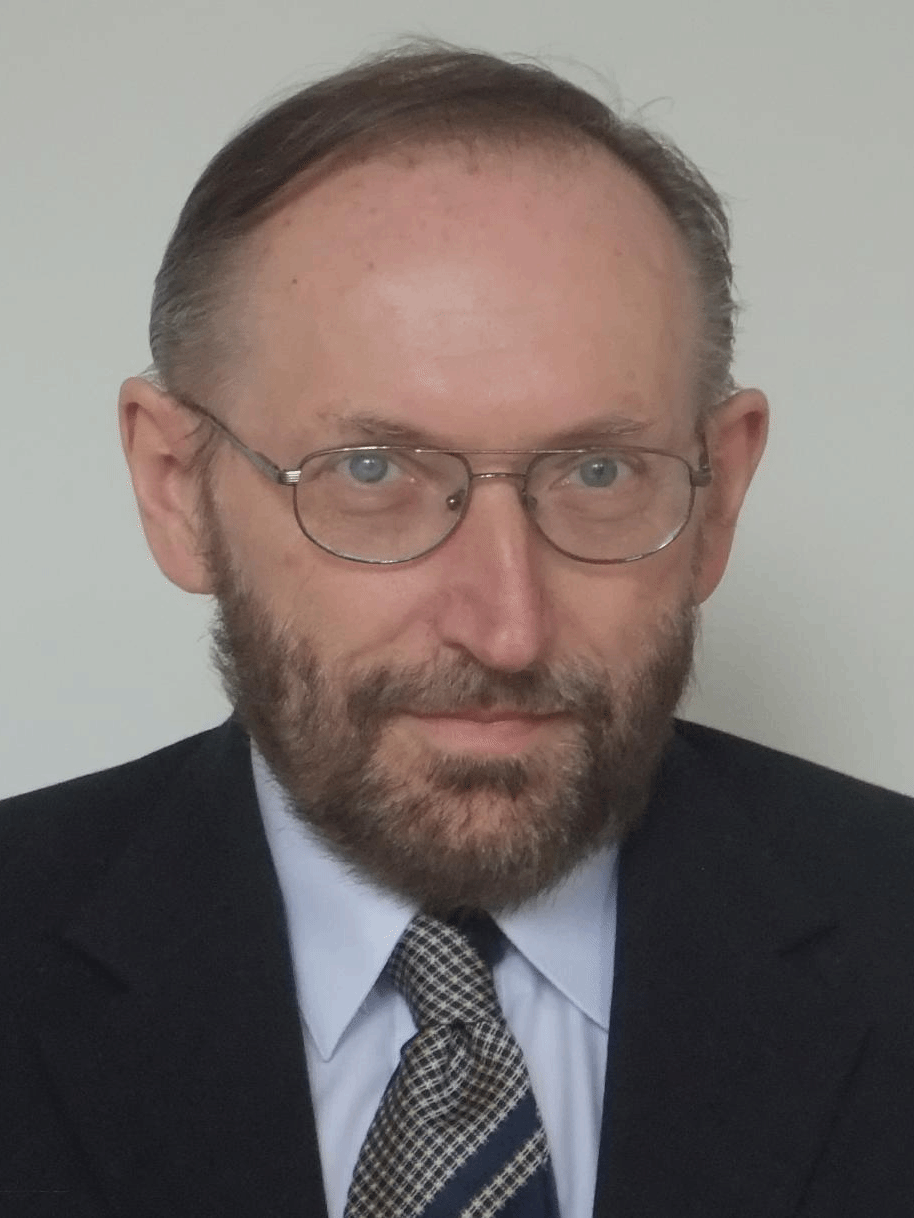
Prof. Witold Pedrycz, University of Alberta, Canada
Witold Pedrycz,教授,加拿大阿尔伯塔大学
Brief Introduction: Witold Pedrycz holds a Ph.D. from the Silesian University of Technology in Poland and currently serves as a professor in the Department of Electrical and Computer Engineering at the University of Alberta, Canada. He is also a foreign member of the Polish Academy of Sciences, a Fellow of the Royal Society of Canada, a Fellow of the Canadian Academy of Engineering, and an IEEE Life Fellow. His research focuses on computational intelligence, fuzzy systems, granular computing, machine learning, and data mining. He proposed the knowledge‑driven machine learning (KD‑ML) paradigm and the concept of knowledge landmarks, dedicating his work to the integration of data and knowledge.
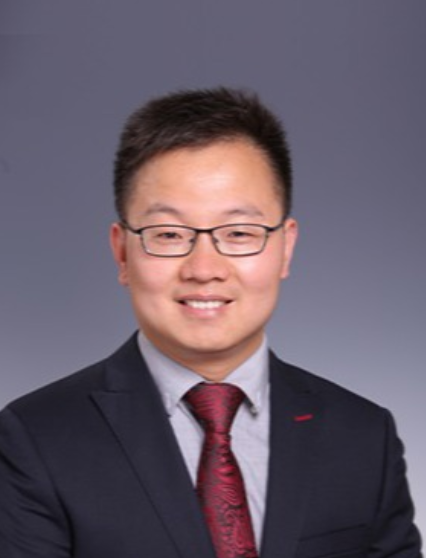
Prof. Keyou You, Tsinghua University, China
游科友,教授,清华大学
Brief Introduction: Keyou You received the B.S. degree in Statistical Science from Sun Yat-sen University, Guangzhou, China, in 2007 and the Ph.D. degree in Electrical and Electronic Engineering from Nanyang Technological University (NTU), Singapore, in 2012. After briefly working as a Research Fellow at NTU, he joined Tsinghua University in Beijing, China where he is now a Full Professor in the Department of Automation. He held visiting positions at Politecnico di Torino, Hong Kong University of Science and Technology, University of Melbourne and etc. Prof. You’s research interests focus on the intersections between control, optimization and learning as well as their applications in autonomous systems. He currently serves as an Associate Editor for international journals such as Automatica and IEEE Transactions on Control of Network Systems, and leads major research projects including the National Natural Science Foundation of China (Distinguished Young Scholars and Key Program) and the National Key R&D Program “Next-Generation Artificial Intelligence”. He has received the First Prize of CAA Natural Science Award, the ACA Temasek Young Educator Award, and Guan Zhao-Zhi Best Paper Award, among others. He has also contributed to three first prizes awarded by Beijing Municipality, the Ministry of Education, and the Ministry of Natural Resources. His supervised doctoral students have received honors including the IFAC Young Author Award, the CAA Outstanding Doctoral Dissertation Award, and the National Postdoctoral Innovative Talent Support Program.
Prof. Huijun Gao, Harbin Institute of Technology, China
高会军,教授,哈尔滨工业大学
Brief Introduction: Huijun Gao is a Professor and a doctoral supervisor at Harbin Institute of Technology. He is a National High-Level Talent, a Recipient of the National Science Found for Distinguished Young Scholars, a Foreign Member of the Academia Europaea, and an IEEE Fellow. He served as a Member of Standing Committee of All-China Youth Federation and Vice-Chairman of Heilongjiang Provincial Youth Federation. His research focuses on intelligent control and instrumentation. He has been awarded two National Natural Science Awards (Second Prizes, ranking first and fifth), one Special Prize and five First Prizes at the provincial/ministerial level or national society level (all ranking first). He was also awarded China Patent Gold Award, Tan Kah Kee Young Scientist Award, China Youth Science and Technology Award, Xplorer Prize, National Advanced Worker, and the China Youth May Fourth Medal. He serves/served as Vice President of the Chinese Association of Automation, President of the IEEE Industrial Electronics Society and Editor-in-Chief of the IEEE/ASME Transactions on Mechatronics. He has received the IEEE Norbert Wiener Award and the IEEE Dr.-Ing. Eugene Mittelmann Achievement Award.

Prof. Weineng Chen, South China University of Technology, China
陈伟能,教授,华南理工大学
Brief Introduction: Wei-Neng Chen (Senior Member, IEEE) received the bachelor’s and Ph.D. degrees in computer science from Sun Yat-sen University, Guangzhou, China, in 2006 and 2012, respectively. He is currently a Full Professor with the School of Computer Science and Engineering, South China University of Technology, Guangzhou. He has co-authored over 200 international journal and conference papers, including more than 100 articles published in IEEE TRANSACTIONS journals. His current research interests include computational intelligence, swarm intelligence, multi-agent systems and their applications. Prof. Chen is a Committee Member of the IEEE CIS Emerging Topics Task Force. He is the Vice Chair of the IEEE Guangzhou Section and the Chair of the IEEE SMC Society Guangzhou Chapter. He serves as an Associate Editor for IEEE TPAMI, IEEE TEVC, IEEE TNNLS and Complex & Intelligent Systems.

Prof. David BASSIR,DGUT-CNAM Institute, Dongguan University of Technology, China
David BASSI,教授,东莞理工学院法国国立工艺学院联合学院
Brief Introduction: Professor David BASSIR is Distinguish professor (Changjiang scholar Program) at Dongguan University of Technology at the Sino French Institute. He is also Head of Smart Structural Health Monitoring and Control Lab (SSHMC). and Expert at European Commission For Research Funds. He is also President of the Sino- French Association for Science and technology. Before joining DGUT, He was Professor in France at University or Technology UTBM and Also Senior researcher at ENS- Paris Saclay University. And before that he was, dean at the University of Lorraine (France), Attaché for Science and Technology at the French Embassy (China), General Director of Research at the ESTP (Paris) and Space Craft engineer at different space agencies such as Arianespace and Astrium Group. He has published more than 167 papers in Sci journals, books, indexed conference proceedings and patent. He supervised over 17 Phd and 34 Masters Students. He contributed to several research projects in France, in Europe and in China. His main research activities are based on Structural optimization, Composites, Multiscale modelling, Smart buildings and Advanced prediction using artificial intelligence. He is also Editor-in-Chief of the Int. journal IJSMDO (EI) and also Scientific editors is few international journals.