
· Keynote Speakers
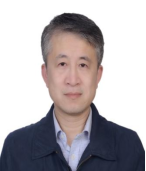
Dr. Zhan Kang is a Changjiang Scholar Chair Professor of Dalian University of Technology. He graduated from Shanghai Jiaotong University in 1992, received his MEng in mechanics from Dalian University of Technology in 1995 and his Dr.-Ing. degree from Stuttgart University, Germany in 2005. His current research involves issues such as topology optimization, structural optimization under uncertainties, dynamic design optimization.
He is the chief editor ofChinese Journal of Computational Mechanics, editor board member ofComputer Methods in Applied Mechanics and Engineering,International Journal for Numerical Methods in Engineering,ASCE-ASME Journal of Risk and Uncertainty in Engineering Systems Part A: Civil Engineering; Part B: Mechanical Engineering. Dr. Kang has published over 140 research papers in peer-reviewed international journals and two monographs. He has been granted the Outstanding Youth Fund of Natural Science Foundation of China (NSFC).
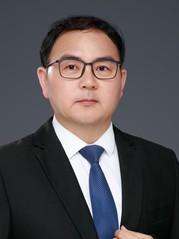
Xiyuan Chen is a Professor and PhD Supervisor at Southeast University, as well as an IET Fellow. He was selected for the “Program for New Century Excellent Talents” of the Ministry of Education in 2006. Professor Chen has long been engaged in fundamental theoretical and applied research on intelligent instruments, inertial navigation, and integrated navigation. He has led over 30 national and provincial research projects, including those funded by the National Natural Science Foundation of China and national defense pre-research programs. He has received over ten academic and technological awards, such as the Special Jury Gold Medal of International Exhibition of Inventions Geneva, Innovation and Entrepreneurship Award granted by the China Association of Inventions, Second Prize of the Ministry of Education for Technical Invention, Jiangsu Provincial Science and Technology Award, and China Patent Award.
In recent years, Professor Chen has published more than 300 papers in international journals and conferences, including IEEE Transactions on Signal Processing, with over 140 papers indexed by SCI(E) and more than 2,500 non-self SCI citations. He holds over 170 authorized invention patents, and his research achievements have been widely applied in practical engineering scenarios. Professor Chen has been consecutively listed in the Top 2% Scientists Worldwide (Annual Impact Ranking) from 2021 to 2025 and the Top 2% Scientists Worldwide (Career-long Impact Ranking) from 2023 to 2025.
He currently serves as Vice Chairman of the Marine Instrumentation Academic Committee of the Chinese Society of Naval Architects and Marine Engineers, Director of the China Instrument and Control Society, Secretary-General of the 10th Council of Jiangsu Instrument and Control Society, Member of the Jiangsu Provincial Steering Committee for Postgraduate Education of Category I Engineering Disciplines, and Member of the 11th Jiangsu Association for Science and Technology. Additionally, he is an invited reviewer for over 60 high-impact SCI/EI journals, a peer review expert for programs and projects of the National Natural Science Foundation of China, an evaluation expert for national, ministerial and provincial science and technology projects and awards, and a review expert for high-level talent programs, including the “National Ten-Thousand Talents Program”.
IET Fellow & New Century Excellent Talents
Top 2% Scientists Worldwide (2021-2025)
170+ Authorized Patents · 300+ Publications
Special Jury Gold Medal, Inventions Geneva
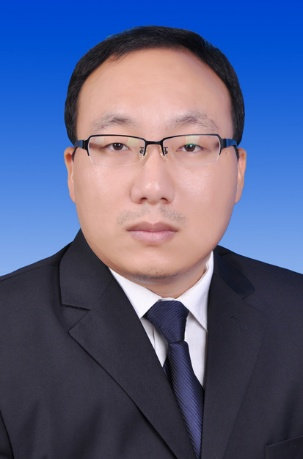
Prof. Xudong Fang is a National Young Talent, PhD Supervisor, and holds a PhD from the Georgia Institute of Technology (USA). He serves as Deputy Director of Shaanxi MEMS Research Center, Assistant Director of the International Joint Laboratory for "Micro-Nano Manufacturing and Testing Technology" (Ministry of Education), and Secretary of the Mechanical and Vehicle Engineering Section of the flagship journalEngineering (Chinese Academy of Engineering).
His primary research focuses on advanced sensing and micro-nano manufacturing technologies for extreme environments, exemplified by silicon carbide high-temperature pressure sensors. He has received support from over 20 projects (including National NSF of China, National Key R&D Program, etc.) and published over 60 papers in journals such asEngineering,Microsystems & Nanoengineering, andNano Energy. He has filed over 60 invention patents (China and U.S.), co-edited 5 academic monographs, and authored 6 standards.
He has developed sensors and testing systems for aerospace, deep-sea, and gas turbine applications, which have been deployed in aerospace units. His honors include the National Young Talent, Shaanxi "Three Qin Special Support" Science and Technology Innovation Leading Talent, among others.
National Young Talent (China)
Shaanxi "Sanqin Special Support" Sci-Tech Innovation Leader
Over 60 patents & 6 standards in advanced MEMS sensing
Principal Investigator: 20+ national projects (NSFC, Key R&D)